
Sleep Study
Polysomnography, known as a sleep study, is a test used to diagnose sleep disorders. Polysomnography records your brain waves, the oxygen level in your blood, and your heart rate and breathing during sleep. It also measures eye and leg movements.
A sleep study may be done at a sleep disorders unit within a hospital or at a sleep center. The test is usually performed at night. But it may be done during the day for shift workers who usually sleep in the daytime.
In addition to diagnosis, a sleep study might help determine a treatment plan if you've been diagnosed with a sleep disorder. It also might be used to adjust your treatment.
Sometimes you may be able to do the sleep study at home. Home sleep apnea tests are used to help diagnose obstructive sleep apnea.
If you're doing a sleep study from home, there are different types of devices that may be used. Each device uses a different combination of sensors. Home sleep apnea tests generally record your breathing rate and airflow, as well as oxygen levels and heart rate. Home test results also may include information on blood vessels.
Polysomnography (sleep study) - Mayo Clinic
Word: polysomnography
| Part | Type | Meaning |
|---|---|---|
| poly- | Prefix | many, much |
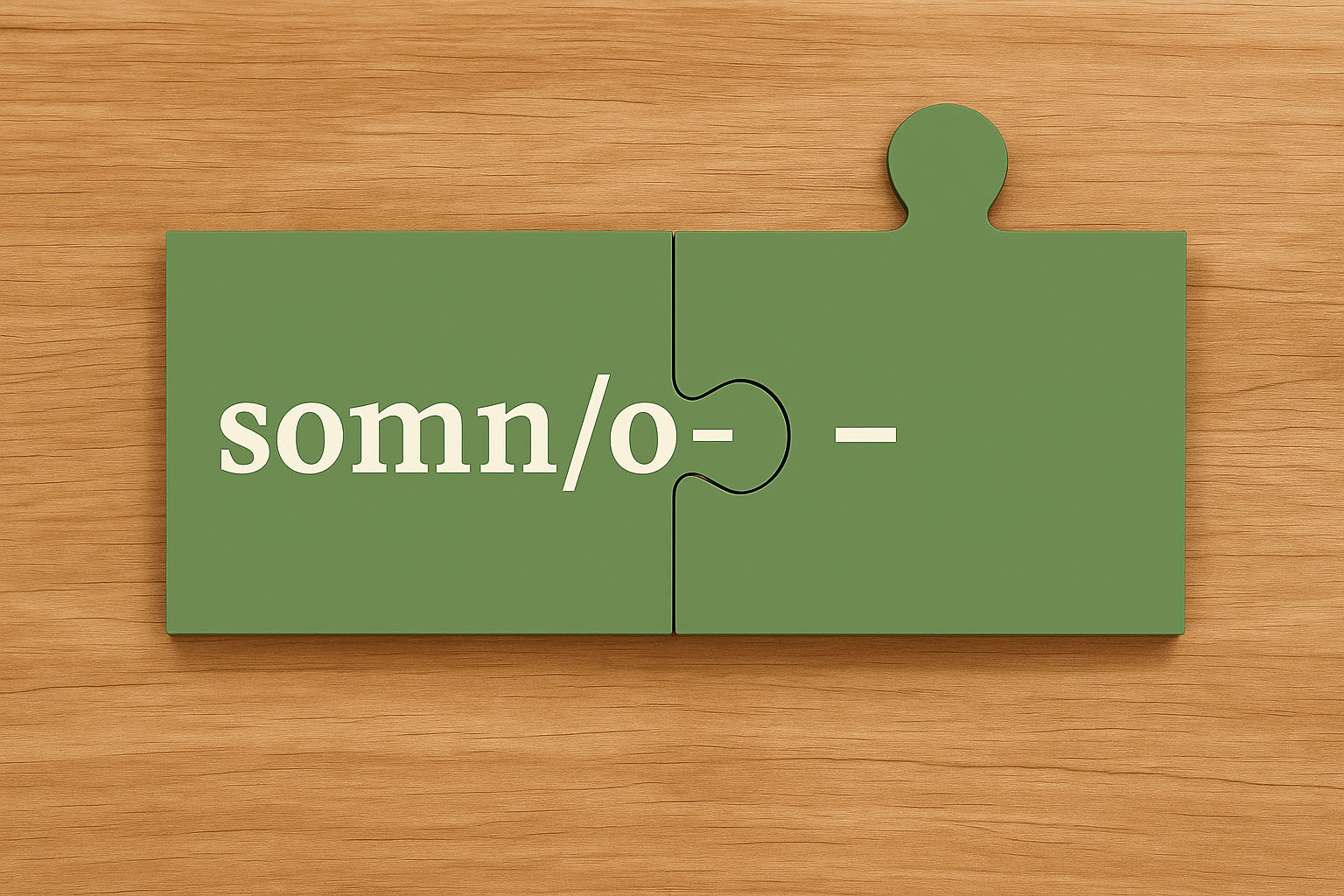
| somn/o | Combining form | sleep |
| -graphy | Suffix | process of recording |
🩺 polysomnography literally means:
“The process of recording many aspects of sleep.”
In medical practice:
Polysomnography is the sleep study test used to diagnose sleep disorders (like sleep apnea, insomnia, or narcolepsy).
It records multiple body functions during sleep — such as brain waves (EEG), eye movements, muscle activity, heart rhythm, and breathing patterns.