
Immune response involves leukocytes and the lymphatic system
– It is a coordinated effort to identify and destroy microorganisms and foreign cells
– Cancer cells may also be targeted by the immune response
• Microorganisms that cause disease are pathogens
Leukocytes attack pathogens and cancer cells
– Neutrophils eat and destroy bacteria
▪ Cells that function this way are phagocytes, and the process is phagocytosis
▪ Neutrophils have a short life span during phagocytosis
– Eosinophils release chemicals that destroy foreign cells; chemicals can also kill parasites
– Basophils release histamine that dilates blood vessels and increases blood flow, bringing more
white cells to the area
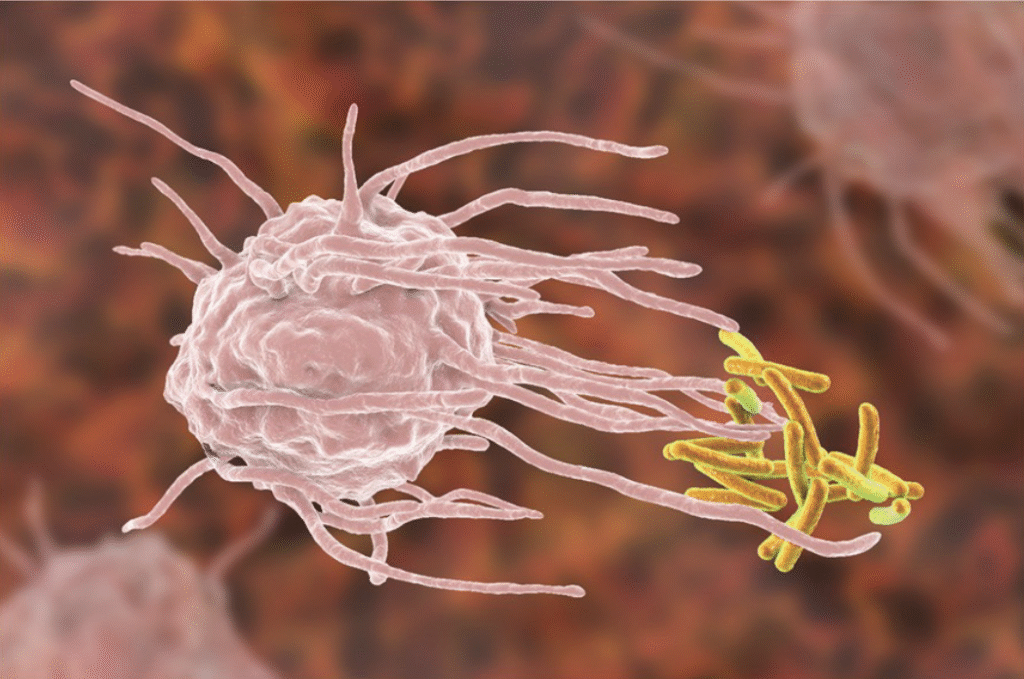
This monocyte white blood cell is a phagocyte that will engulf and destroy the rod-shaped bacteria that are causing an infection
Lymphocytes come in several types
– NK (natural killer) cells recognize cancer cells or viral-infected cells and destroy them– B cells turn to plasma cells and make antibodies when presented with pathogen fragments
– T cells develop into four different types
▪ Cytotoxic T cells kill viral-infected cells
▪ Helper T cells stimulate cytotoxic T cell production
▪ Memory T cells “remember” a virus on later exposure
▪ Suppressor T cells limit the immune response
Monocytes engulf microorganisms and pathogens covered with antibodies and release chemicals
– Also engulf and destroy cancerous cells, dead leukocytes, and cellular debris
– Interferon stimulates body cells to produce antiviral substances and stimulates NK cells
– Interleukin stimulates B cells, T cells, and NK cells and produces fever
– Tumor necrosis factor destroys endotoxins produced by bacteria and kills cancer cells
• Antibodies are produced by B cells when they change to plasma cells
– Antibodies coat the surface of an invading cell
– The coating attracts leukocytes to the cell and marks it for destruction
• Complements are plasma proteins that boost antibody effectiveness
– They drill holes into the pathogen’s cell wall