
Injured blood vessels constrict to decrease blood flow and a series of steps begins
1. Thrombocytes form clumps (aggregation)
2. Clotting factors are released
3. Fibrin strands form, trapping erythrocytes and creating a clot (coagulation)
4. Bleeding ceases (hemostasis)
To achieve homeostasis, all twelve clotting factors must be present at normal levels
– Factor I : Fibrinogen, from the liver
– Factor II : Prothrombin, from the liver
– Factor III : Thromboplastin, from injured tissue
– Factor IV : Calcium, blood electrolyte
– Other factors: From liver and platelets
• Plasma fluid without clotting factors is known as serum
• Clot size is limited by heparin
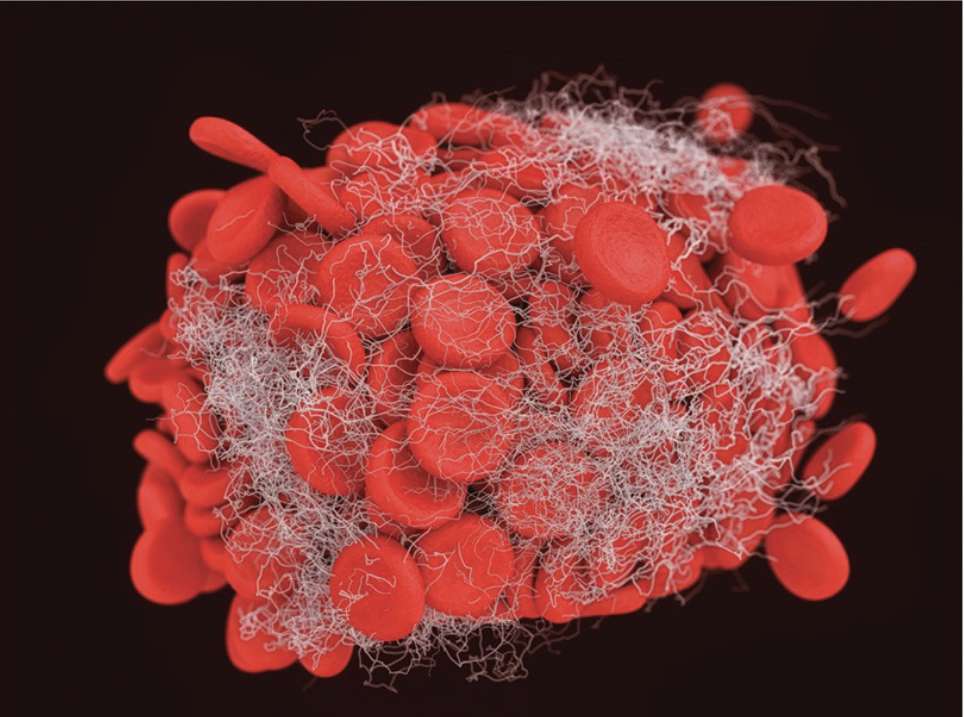
The strands of fibrin trap many erythrocytes to form a blood clot. A blood clot disintegrates after 24–48 hours.